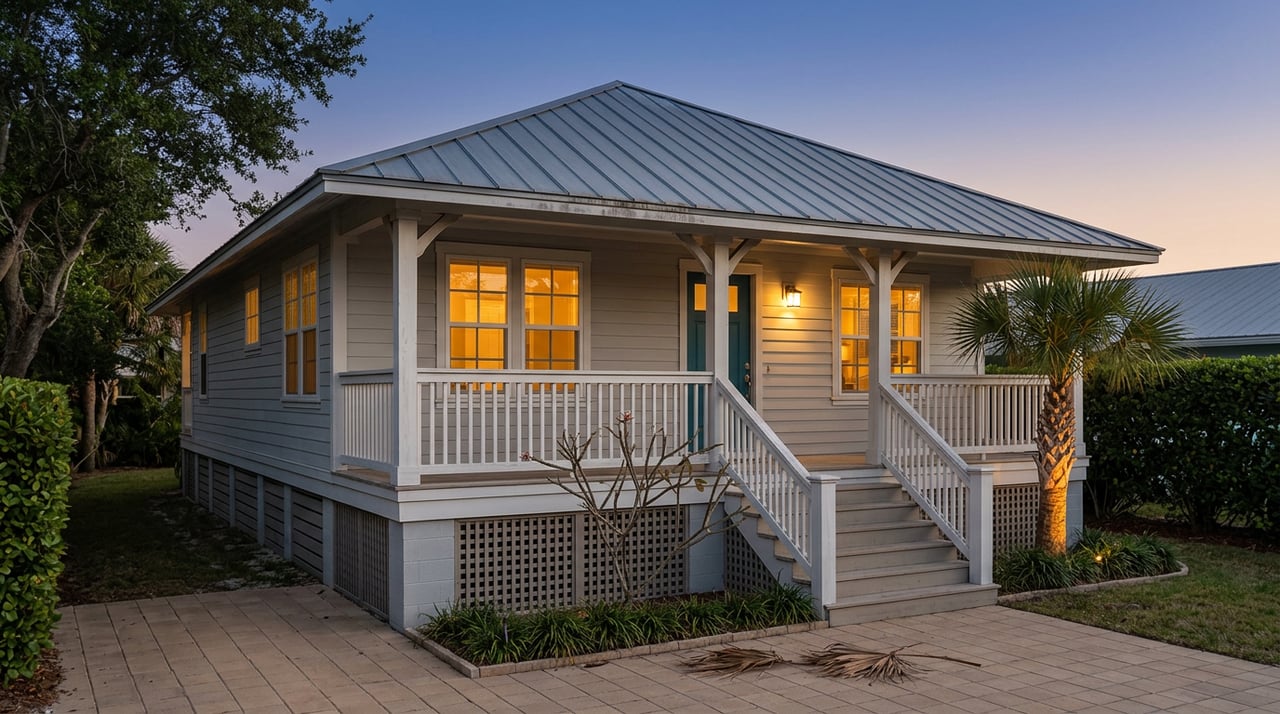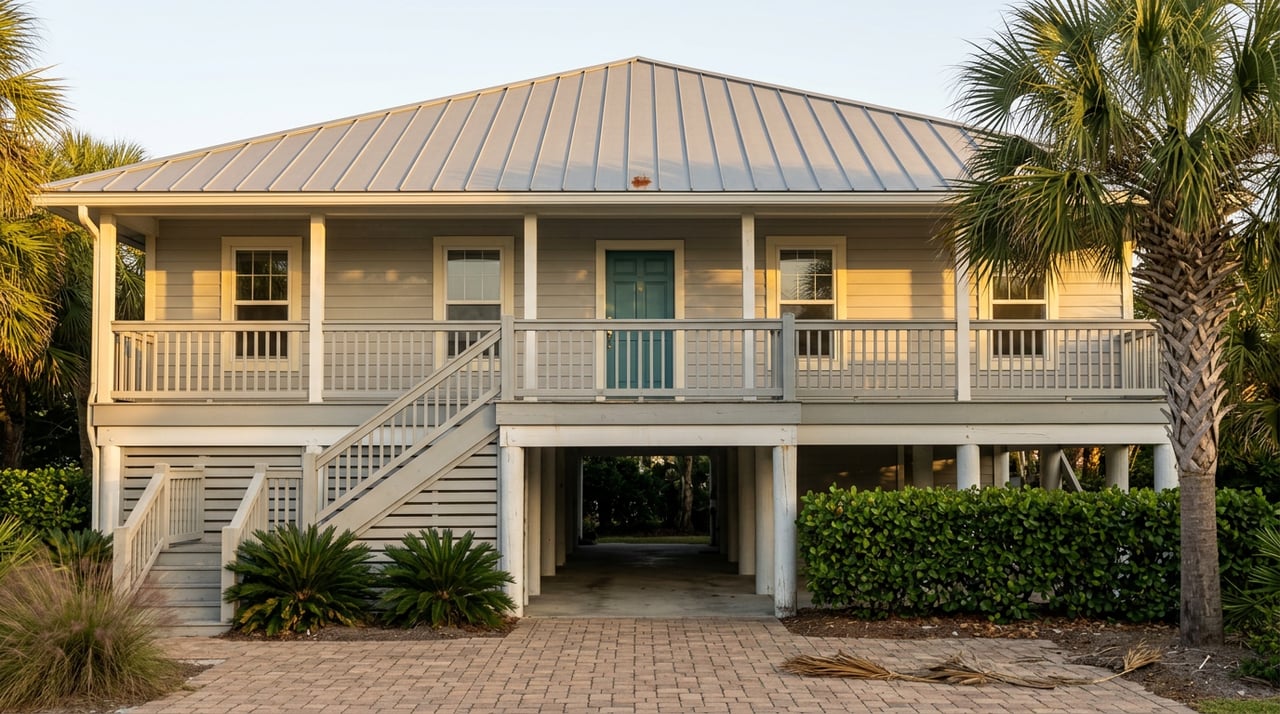
Picture two six-bedroom gulf-view homes on Anna Maria Island, same square footage, same rental-grade finishes, same asking price. One can legally sleep 14 guests. The other tops out at 8. The difference isn't the house. It's the zip code.
That gap is not hypothetical. It's the live math behind an occupancy rule Bradenton Beach city commissioners were still writing as of this month, and it changes what a buyer should actually expect a short-term rental to earn depending on which of the island's three cities the property sits in.
The Number That's Missing From Every Listing
Every vacation rental listing on Anna Maria Island advertises bedrooms and bathrooms. None of them advertise the one number that actually determines how much revenue a house can pull in on a busy weekend: legal occupancy.
Bradenton Beach commissioners spent a July 21 workshop trying to pin that number down for the first time in over a decade. The city's current vacation rental ordinance dates back more than ten years and, according to City Attorney Erica Augello, its occupancy language is confusing enough that it doesn't actually establish a clear standard tied to bedroom count. The framework commissioners are leaning toward is a two-plus-two formula: two guests per bedroom, plus two more who sleep on a sofa, futon, or similar non-bedroom setup. Under that math, a two-bedroom rental sleeps 6, a four-bedroom sleeps 10, and a six-bedroom sleeps 14.
No commission vote had finalized that language as of this writing. The board picked the discussion back up at its Aug. 6 meeting, and anyone shopping a Bradenton Beach rental right now should confirm the exact adopted wording with the city before running revenue projections off a bedroom count. A proposal in July is not an ordinance in August.
Why the City Is Doing This Now
The push isn't coming from nowhere. Mayor John Chappie has pointed out that only about 11 percent of properties in Bradenton Beach are owner-occupied homesteads, meaning nearly every resident lives next to, across from, or behind a vacation rental. Add an estimated 5,000 visitors passing through the island on a given day against a year-round population of roughly 300 to 400, and you get a small city trying to write rules for a crowd many times its own size.
Longtime resident Lyn Clark, who has lived in Bradenton Beach since 1999, told commissioners the rental culture is simply part of the island's identity at this point. Rental owner Ken McDonough, who has owned property there for close to 15 years, showed up to the same workshop wanting an outcome that's fair to owners, renters, and full-time neighbors alike. Both were reacting to the same underlying tension: noise complaints, overflowing trash, and parking pressure on one side, and property owners' revenue on the other.
Same House, Three Different Ceilings
Here's the part that matters most if you're comparing listings across city lines. Anna Maria, Holmes Beach, and Bradenton Beach each answer the occupancy question differently, and the gap between them widens as the house gets bigger.
| Home Size | Anna Maria (flat cap) | Holmes Beach | Bradenton Beach (proposed) |
|---|---|---|---|
| 4 bedrooms | 8 guests | 8 guests | 10 guests |
| 6 bedrooms | 8 guests | 12 guests | 14 guests |
Anna Maria caps any rental with three or more bedrooms at a flat 8 occupants, regardless of how many bedrooms the home actually has. Holmes Beach uses a simpler standard: 6 guests, or two per bedroom, whichever number is higher, with no additional-guest allowance layered on top. Bradenton Beach's proposed formula keeps scaling upward with no ceiling, so a larger home keeps gaining sleeping capacity the more bedrooms it has.
That means a big Bradenton Beach rental holds revenue potential that the same-sized home loses the moment you cross into Anna Maria. It also explains why Anna Maria has already had to deal with the fallout of a flat cap in practice. Back in 2015, when Anna Maria first adopted its rental ordinance, roughly 100 property owners ended up filing Bert Harris Act claims and the city granted two-plus-two exceptions to resolve them. A flat cap on occupancy is not a small technical detail. It's the kind of rule that ends up in front of lawyers.
The Fight Over the Flat Cap
That history is exactly why Bradenton Beach commissioners spent so much of the July workshop arguing against a flat number. An earlier, stricter version of the proposal would have capped every rental at 10 guests no matter the size. Owners pushed back hard, and McDonough summed up the concern by saying a flat cap would encroach on the people's investment and property.
Commissioner Scott Bear made the same point from the dais: a flat limit on a large home just cuts its rental potential and invites legal challenges from owners who feel restricted. Commissioner Ralph Cole went further, arguing that any hard number is simply unenforceable and that the city's real leverage is its noise ordinance, not a headcount. Commissioner Robert Talham floated a 12-person maximum as a middle ground, but the board ultimately lined up behind the bedroom-based formula instead.
City Attorney Augello's response to the property-rights pushback is worth sitting with if you're on the buying side of this. She told commissioners plainly that a license is not a right, it's a privilege, and that privilege comes with regulations attached. In other words, the city believes it's on solid legal ground to set these limits, even if some owners disagree.
What Happens If Your Listing Gets This Wrong
A state DBPR license is required for any Florida property rented three or more times a year for stays under 30 days, but that state license does not set occupancy limits. Occupancy is a local matter, controlled by whichever is more restrictive between the property's certificate of occupancy and the city's own ordinance.
In Bradenton Beach, getting this wrong has real consequences. Under the city's current enforcement structure, three code violations within a year trigger a three-month license suspension. Six violations add another six months on top of that. Nine violations bring a full year's suspension, and repeat violations during a suspension period can lead to outright revocation. Those penalties are decided by the city's special magistrate, not by commissioners or staff, which takes the politics out of the enforcement once a case reaches that stage.
Just across the bridge, the mainland City of Bradenton runs an entirely separate rulebook under its own Ordinance 3093, a reminder that "Bradenton" and "Bradenton Beach" are two different governments with two different sets of rules. If you're comparing a mainland property against an island one, don't assume the occupancy math or the enforcement process carries over.
What This Means If You're Comparing Homes Across City Lines
If you're evaluating vacation rental properties across Anna Maria, Holmes Beach, and Bradenton Beach, the smart move is to stop treating bedroom count as a stand-in for revenue potential. Two homes with the same floor plan can have meaningfully different legal sleeping capacity, and that capacity is the number that actually drives what you can charge for a peak-week booking.
Before you write an offer on any island rental right now, confirm the property's current certificate of occupancy, ask what the city's TPLE license actually states for that specific address, and build your revenue model around the confirmed number rather than the bedroom count on the listing sheet. Because Duncan Real Estate's brokerage umbrella includes vacation-rental and property-management services, an investor working with April Green LLC can get that occupancy-adjusted revenue picture modeled out during due diligence rather than after closing, when it's too late to renegotiate.
A Few Questions Worth Asking Directly
Has Bradenton Beach finalized the two-plus-two rule yet? Not as of this writing. Commissioners reached general agreement in July and continued the discussion at their Aug. 6 meeting. Confirm the current adopted language with the city, or with your agent, before assuming any specific occupancy number holds.
Can a very large home still sleep a big group in Bradenton Beach? Under the proposed formula, yes, the math keeps scaling with bedroom count and has no flat ceiling. That's different from Anna Maria, where any home with three or more bedrooms is capped at 8 regardless of size.
What if my certificate of occupancy and my DBPR license don't agree on a number? Bradenton Beach's existing ordinance language says occupancy can't exceed whichever of those two figures is lower. Treat the more restrictive number as the real ceiling until the city says otherwise.
If you're shopping Bradenton Beach, Anna Maria, or Holmes Beach and want the occupancy math run correctly before you make an offer, Your AMI Home Girls can walk you through it property by property. Get your free home valuation or schedule a consultation today.