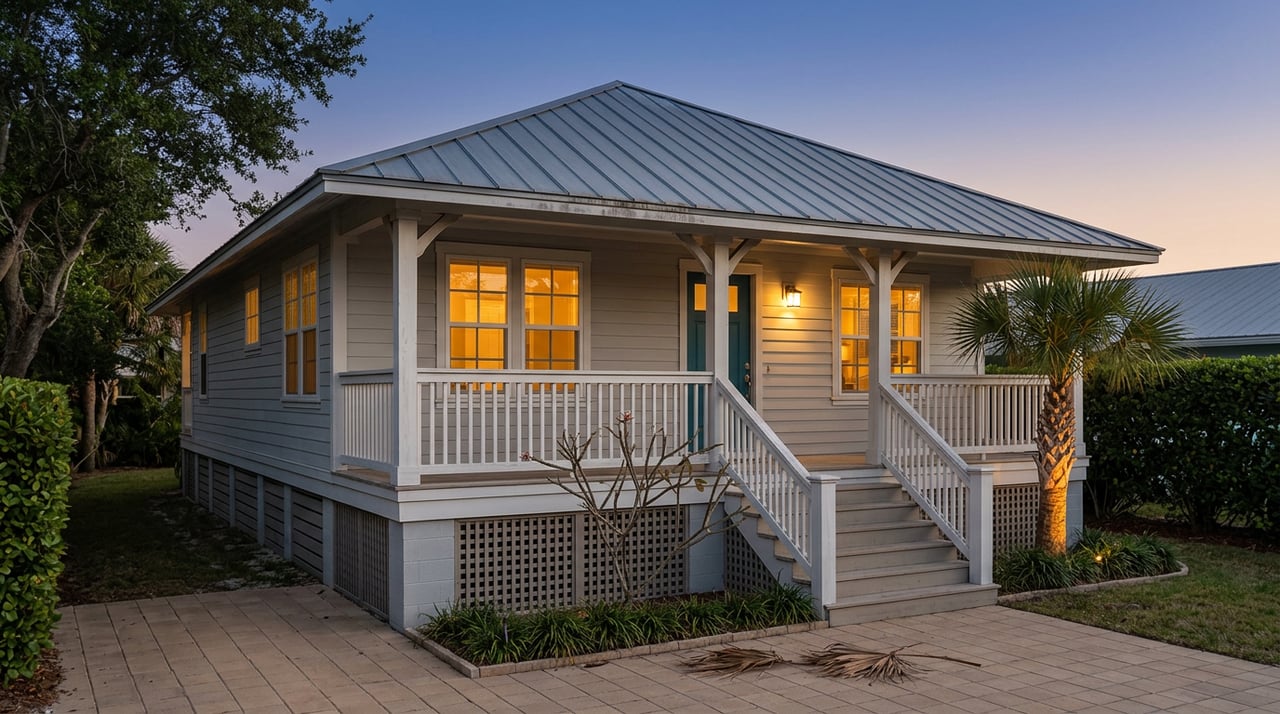
The day you close on a short-term rental in the city of Bradenton, the paperwork that made it a legal short-term rental stops existing. Not eventually. Not if you forget a form. Automatically, the moment the deed changes hands.
That single fact reshapes how an investor should read a "turnkey income" listing anywhere inside Bradenton's city limits, whether it's a canal home near the river or a cottage a few blocks from Village of the Arts. The income history on the listing sheet was earned by the seller's certificate. You don't inherit it. You start over, on a clock that can't begin ticking until after you already own the house.
The Certificate Doesn't Come With the House
Since February 2022, every short-term rental inside Bradenton has operated under Ordinance 3093, later streamlined by Ordinance 4001 and expanded to cover condos under Ordinance 4011 in July 2023. Together they sit in Chapter 22, Article III of the city's code and require a Certificate of Registration before any property can legally rent for stays under 30 days more than three times a year.
Here's the part that catches buyers off guard. The city's own registration guidance is explicit: a Certificate of Registration is non-transferable and non-assignable. It's valid only to the owner named on the application and only for the specific property listed. It is not a feature of the house the way a pool permit or a survey is. It's a license issued to a person, and when that person sells, the license doesn't follow the sale. It ends.
Why the 15-Day Clock Doesn't Start When You Think It Does
The city gives a new owner 15 days from the date of transfer to apply for a fresh certificate under their own name. Miss that window and the old certificate lapses entirely, whether or not anyone realized it needed replacing.
Fifteen days sounds workable until you look at what the application actually asks for. One of the required documents is proof of ownership, a copy of the deed or a tax bill showing you as the owner. That means the clock can't start before closing, because you can't prove you own something you haven't closed on yet. You can't pre-file. You can't get ahead of it. The 15-day window and the gap between closing and a functioning listing are the same gap, and it opens on day one of ownership, not before.
In practice, that guarantees a dead period. The house you just bought as a short-term rental cannot legally operate as one until a new certificate is issued in your name, and issuance isn't instant. It follows the application, and the application follows an inspection.
What the Application Actually Requires
Once you own the property, here's what has to be assembled and submitted before the city will even schedule that inspection:
- A completed Vacation Rental Registration Application and owner affidavit
- A signed Designated Responsible Party form, naming someone reachable 24/7 for code, police, or emergency contact
- A current City of Bradenton Local Business Tax Receipt
- An active Transient Public Lodging Establishment license from the state's Division of Hotels and Restaurants (DBPR)
- A current certificate of registration from the Florida Department of Revenue
- An active Manatee County Tax Collector account
- Exterior and interior sketches showing structures, pools, and off-street parking counts
- A sample rental agreement, plus copies of any pre-existing ones
None of this is exotic, but almost none of it can be finished before you hold title. A few pieces, like the DBPR license, can sometimes be started in advance since they're state-level rather than tied to the deed. Everything tied to city registration cannot.
Can be started before closing | Can only start after closing |
|---|---|
DBPR (state) license application | City Certificate of Registration application |
Florida Dept. of Revenue certificate | City-scheduled inspection |
Manatee County Tax Collector account setup | Business Tax Receipt tied to new owner |
Drafting a sample rental agreement | Designated Responsible Party filing under new name |
The initial fee is $250, with a $150 annual renewal after that, as of the city's current fee schedule. That's a small number next to the real cost, which is lost booking days on a property you assumed would earn from week one.
The Lien Trap Nobody Mentions in the Listing
There's a second mechanism that stacks on top of the first, and it's the one that turns a routine closing into a stalled one. The city won't issue or renew a Certificate of Registration at all while any open code violation or unpaid fine or lien is tied to the property, regardless of who racked it up.
That reframes what a lien search is for. In most transactions, a title company clears liens because unresolved ones can cloud the sale itself. Here, an outstanding code enforcement issue doesn't just complicate title. It can sit on the property after closing and block your certificate from being issued at all, even though you weren't the one who caused it. If you're buying a property with any history of code complaints, that history is now a revenue-timeline question, not just a title question, and it's worth asking about before you write a number into your offer.
What This Means If You're Comparing Bradenton to the Island Cities
Manatee County doesn't run one system for short-term rentals. It runs several, and they don't talk to each other. Anna Maria, Holmes Beach, and Bradenton Beach each administer their own registration process, with their own inspection standards, their own occupancy math, and in Holmes Beach's case, a certificate that's valid for two years rather than renewed annually. None of those cities' rules apply once you're inside Bradenton's city limits, and Bradenton's rules don't apply on the island.
For an investor weighing a mainland Bradenton property against something on Anna Maria Island, that matters beyond price per square foot. It means the operational playbook you learned on one side of the bridge doesn't carry over to the other. A property manager fluent in Holmes Beach's two-year certificate cycle still has to learn Bradenton's annual renewal and its 15-day ownership-transfer clock from scratch. That's not a reason to avoid the mainland market. It's a reason to ask the question before closing rather than after.
Before You Write a Rental Income Number Into Your Offer
If you're under contract on a Bradenton property you plan to operate as a short-term rental, a few questions are worth asking directly, ideally before you're staring down a 15-day countdown you didn't know existed.
Does the seller's certificate transfer to me at closing? No. It cannot be transferred or assigned under any circumstance. You'll need to apply fresh, in your own name, within 15 days of the transfer date.
Can I list the property for rent while my new application is pending? The registration exists precisely because the city ties legal operation to an issued certificate under the current owner's name. Advertising before your own certificate is issued is the kind of gap that invites a code complaint, not the kind of gap worth testing.
What if there's an unresolved code violation from the previous owner? It can block your certificate from issuing until it's cleared, regardless of who caused it. Ask your title company to flag any open code enforcement cases specifically, not just standard liens, before you close.
The Bottom Line
A "turnkey" short-term rental in Bradenton is turnkey for its current owner. For you, it's a fresh application, a fresh inspection, and a 15-day clock that starts the day you become the person the city is willing to license, not the day you sign a purchase agreement. Building that lag into your first-year income projection, rather than discovering it after closing, is the difference between a smooth transition and a few weeks of a beautiful, empty house.
If you're weighing a Bradenton investment property against something on Anna Maria Island, or you just want a straight answer about how a specific address's rental history and registration status stack up, we'd rather walk you through it before you're under contract than after. Reach out to Your AMI Home Girls for a free home valuation or to schedule a consultation, and we'll help you read the paperwork the way we read it every day.