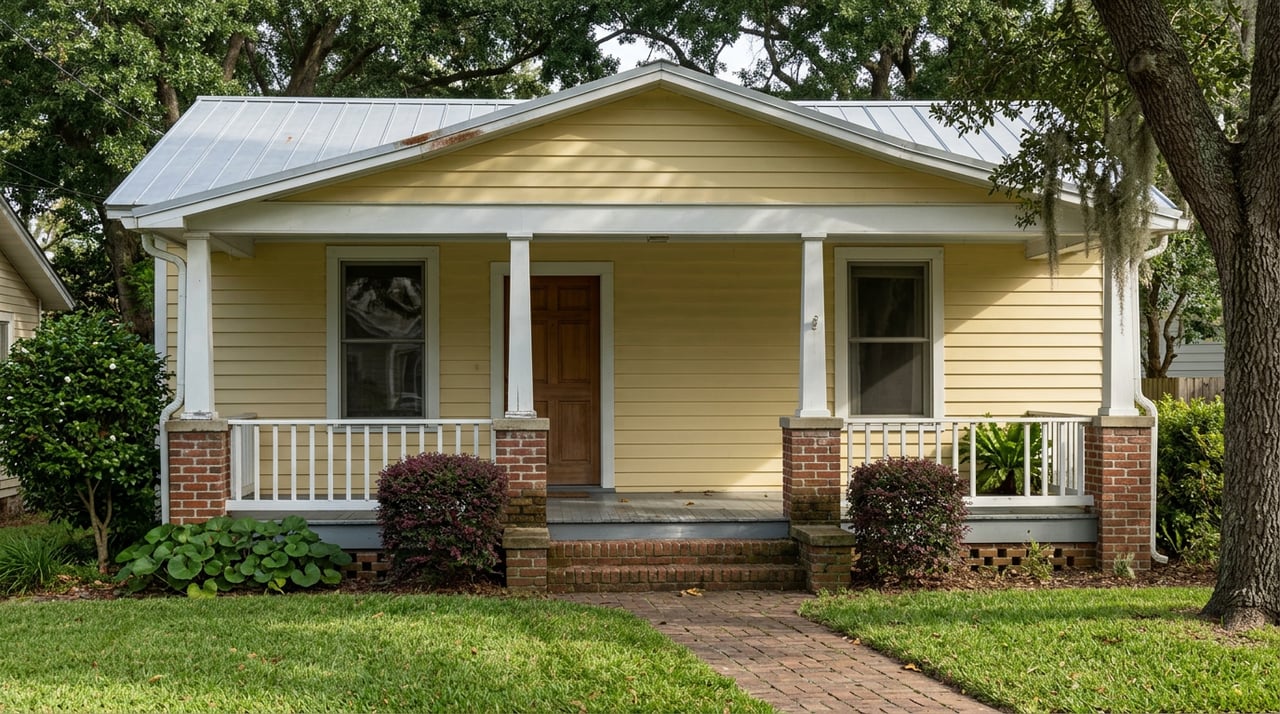
A buyer under contract on a house in West Bradenton got an insurance quote of $1,200 a year when the offer went in. Three days before closing, the underwriter finished reviewing the roof's age and the wind mitigation report and came back with a new number: $4,800. The contract had to be renegotiated on the spot, and the deal nearly didn't survive the week.
Nothing about the house had changed. It still had the same roof, the same panel, the same bones it had during the home inspection. What changed was which test the house was being graded against, and that's the part almost nobody explains before a buyer signs a contract on one of Bradenton's older homes.
Two Different Tests, Two Different Graders
A general home inspection tells you whether a house works. The inspector runs the faucets, tests the outlets, checks the roof for soft spots, and hands you a report on condition. It is thorough, and it is the document most buyers think of as the finish line before closing.
Insurance underwriting is a separate process with its own pass or fail criteria, and it doesn't care how a house shows. A 4-point inspection, which most Florida carriers require once a home hits 20 years old (some push that threshold to 25 or 30), scores exactly four systems: roof, electrical, plumbing, and HVAC. It's a short document, sometimes just a few pages, and it answers one question: is this house insurable at all.
The panel brand matters here in a way a general inspection doesn't weigh. Federal Pacific Stab-Lok breakers, common in mid-century construction, have documented fail-to-trip rates between 25 and 65 percent, and both FPE and Zinsco panels are effectively blacklisted by Florida carriers. A home inspector will note the panel brand and move on. An underwriter will often require the panel to be replaced within a 30 to 60 day window after the policy binds.
Pipe material works the same way. Cast iron drain lines were standard construction from the 1920s through the 1970s, and while the material is rated for a 40 to 60 year lifespan, Florida's heat, humidity, and sewer-gas chemistry cut the realistic life down to something closer to 25 to 30 years. A home can drain perfectly the day of the inspection and still have a policy declined or flagged pending a sewer scope, because the deterioration happens under the slab where a standard walkthrough never looks.
Why This Hits Wares Creek, Point Pleasant, and the River District Hardest
This is not an abstract risk for Bradenton. It's a geography problem, and the geography is the city's most charming inventory.
Wares Creek, just west of downtown, holds more than 300 homes, and most of them have been standing for at least 65 years. Some date to the late 1800s. The bungalows and cottages there were often built in the 1920s and 1930s from Sears Roebuck kits, mixed in with Spanish Colonial and early Florida Ranch styles. Point Pleasant, the peninsula neighborhood that pokes into the Manatee River a short walk from Old Main Street, has fewer than 100 homes total, many turn-of-the-century construction. Old Manatee, settled in the 1840s just east of downtown, is one of the oldest parts of the city, and the River District that rings downtown itself holds the deepest concentration of Bradenton's early 20th century housing stock, including Craftsman bungalows, Mediterranean Revival homes, and Colonial Revival cottages.
Most of these neighborhoods predate the HOA era entirely and have no association governing them. Renovations inside the house are generally unrestricted, but exterior changes on a contributing historic property within a designated district typically require review through the City of Bradenton's Building and Permitting Division.
That combination, genuine age plus loose restriction on interior updates, is exactly why so many of these houses look move-in ready while still carrying original 1960s wiring or a drain line nobody has touched since Eisenhower. A fresh kitchen and a repainted exterior tell you nothing about what's behind the wall or under the slab, and that's precisely what the insurance side is built to catch.
Here's roughly what the two most common culprits cost to fix, once they're flagged:
| Issue | Typical remediation cost | Insurer response |
|---|---|---|
| Federal Pacific or Zinsco panel | $1,500 to $3,500 | Often required within 30 to 60 days post-bind |
| Cast iron drain replacement (full house) | $8,000 to $25,000+ | Sewer scope frequently required before binding |
| Wind mitigation inspection | $75 to $150 | Can cut the windstorm portion of premium 20 to 45 percent |
| 4-point inspection | $75 to $200 | Required by most carriers on homes 20+ years old |
The Form That Changed on April 1
There's a second wrinkle specific to this year. The Florida Office of Insurance Regulation revised the wind mitigation inspection form, OIR-B1-1802, for the first time in over a decade. According to Fuller Insurance, the Florida Cabinet approved the update in September 2025, and as of April 1, 2026, every new wind mitigation inspection has to use the revised version, which requires more documentation for impact windows, roof coverings, and roof-to-wall connections.
If a seller in one of these older neighborhoods already has a wind mitigation report completed before that date, Acentria says it generally stays valid for its full five-year window as long as nothing structural has changed. But if a roof, windows, or doors have been replaced since the last inspection and that hasn't been documented on the new form, the seller is leaving a real discount on the table for whoever buys the house, and a buyer's underwriter may ask for a fresh one anyway.
Manatee County actually shows up on the state's list of counties with comparatively lower average homeowners premiums. That county-wide average, though, says nothing about the specific house a buyer is under contract on. It's an average across thousands of policies, most of them newer construction. A single 1930s cottage with an original panel and a 28-year-old roof gets underwritten on its own terms, not the county's.
A passed home inspection tells a buyer the house currently works. It says nothing about whether an insurer will agree to cover it, and those are two different questions with two different answers.
The Timing Trap Nobody Warns You About
Here's where the West Bradenton story becomes instructive rather than just alarming. Most purchase contracts build the inspection period early, giving buyers a window to negotiate repairs based on the general inspector's findings. Insurance quotes, especially binding ones that reflect the actual underwriting decision, often don't land until later in the process, sometimes not until the loan is well into processing and other contingency periods have already closed.
That gap is where deals die. Not because the house failed inspection. Because the insurance number showed up too late to renegotiate cleanly, and by then the buyer's deposit and timeline were already exposed.
The math right now makes the timing sting more than it used to. Manatee County's remaining pool of Citizens Property Insurance policies, the state-backed option of last resort, had shrunk to roughly 5,700 personal residential policies as of May 31, 2026, and it's falling month over month as private carriers pick up business. According to LiveCovered, Citizens is also phasing in a requirement that every remaining wind-only policy carry separate flood coverage by January 1, 2027. Fewer safety-net options means a declined private quote has fewer places to land, and less time to fix it before a closing date.
Meanwhile, the local market is moving at a pace that doesn't leave much room for a surprise. For the week of August 2 through 8, 2026, Manatee County recorded 156 closed sales at a median price of $445,000, with sellers achieving 94.2 percent of list price and closed homes averaging 72 days on market. Bradenton itself was the most active city in the county that week, with 82 new listings, 78 pending sales, and 75 closings. A well-priced house in this market moves. An insurance surprise at day 65 doesn't fit neatly into a deal that's already been moving for two months.
What to Actually Do Before You're Three Days From Closing
If you're buying or selling a home built before roughly 1990 in Wares Creek, Point Pleasant, Old Manatee, or the River District, a few moves change the outcome:
- Request a binding insurance quote, not an estimate, as early as possible after going under contract, ideally alongside the general home inspection rather than after it.
- Ask your inspector to note the electrical panel brand by name in the report. If it's Federal Pacific, Zinsco, or Challenger, treat replacement as a negotiating point immediately, not a surprise later.
- For any home built before 1975, ask whether a sewer scope has ever been done. It's a small cost against a potential five-figure surprise.
- If you're selling and your last wind mitigation report predates April 1, 2026, and you've replaced a roof, windows, or doors since, get a fresh inspection on the new form before listing. It's a credit you're currently not getting paid for.
- Build your contract timeline assuming the insurance answer will take longer than the home inspection answer, and don't let other contingencies expire before it arrives.
A Few Questions Worth Asking Directly
Does passing a 4-point inspection guarantee I can get insurance? It improves your odds, but the carrier still applies its own underwriting rules on top of the 4-point findings. A clean 4-point with an old panel brand can still result in a decline or a conditional bind.
Is a cast iron drain line an automatic dealbreaker? Not automatically, but it's a five-figure repair range if it's already failing, and most insurers will want a sewer scope on pre-1975 homes before they'll bind coverage without conditions.
If my wind mitigation report is from 2023, do I need a new one? Not necessarily. Reports completed before April 1, 2026 generally remain valid for their full five-year window if nothing structural has changed. If you've re-roofed or replaced openings since then, a new inspection on the current form is worth getting before you list.
An old panel or an aging roof isn't a reason to walk away from one of these houses. It's a reason to get the insurance conversation started on day one instead of day sixty. If you're weighing a Bradenton property in one of these neighborhoods, or you're getting ready to list one, Your AMI Home Girls can walk the timeline with you before you're the one staring at a quote three days out from closing.
This article is general information, not legal, tax or financial advice. Consult a qualified professional about your situation.